Sori
The song. It runs over three hours.
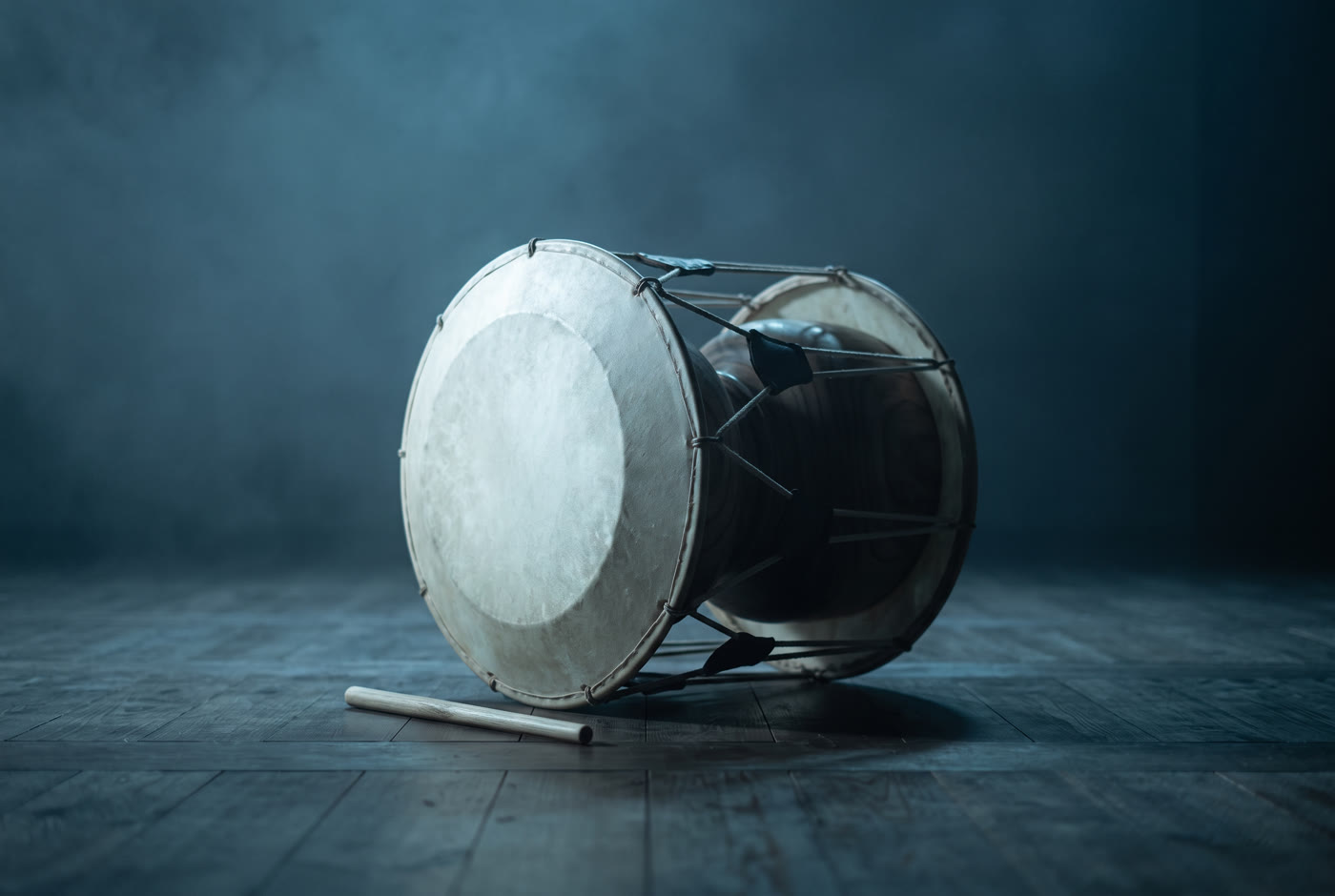
A space one person opens with a voice.
One singer, one drummer.
That's everyone who takes the stage.
What completes the pan
is the people sitting around it.
One singer, one drummer. The seated crowd completes the space.
See where the pan opensPan is a gathering place.
Sori is song.
So pansori is song sung where people gather.
In 18th-century Jeolla Province, twelve madang were sung. Five survive today.
Yu Jin-han sets Chunhyangga down in Chinese verse — the oldest surviving record of pansori.
Eight great masters vie in song, and Shin Jae-hyo sets the scattered librettos in order.
Hyeomnyulsa, the first indoor theater, opens — and changgeuk, pansori sung by a cast, is born.
The sound rides phonograph records into homes across the country.
Pansori is designated National Intangible Cultural Heritage of Korea.
Proclaimed a Masterpiece of the Oral and Intangible Heritage of Humanity.
The song. It runs over three hours.
The speech. The song pauses and turns to storytelling.
The gesture. A single fan becomes a river, then a sword.
The calls from drummer and audience. Without them, it isn't a pan.
Press and hold
What you just did is chuimsae. In pansori, the audience is not there merely to listen. The singer draws strength from these calls and paces the next passage by them.
Chunhyangga — the song of waiting. The longest of the five, and the most often sung.
Simcheongga — a blind father and his daughter. The hall falls silent as she leaps into the sea.
Heungboga — poverty and a gourd seed. It makes you laugh, then suddenly ache.
Sugungga — the hare and the terrapin. 'Beom Naeryeonda (Tiger Is Coming)' lives inside it.
Jeokbyeokga — the song of war. Dead soldiers call out their names in one passage.
Only the titles remain; the music was never passed down.
Singers train alone in the mountains, shouting at a waterfall until the voice breaks — and keep going until it opens again. This solitary discipline is called dokgong.
The voice earned this way is called deugeum. Not a smooth voice, but one whose cracks and grain can carry feeling.
Suriseong — the husky, weathered timbre. Pansori prizes this rough sound above all.
Imyeon — the sound must fit the scene. Sad passages sung sadly, urgent ones urgently.
Deoneum — a passage a master polishes into their own, laying a life over the song a teacher handed down.
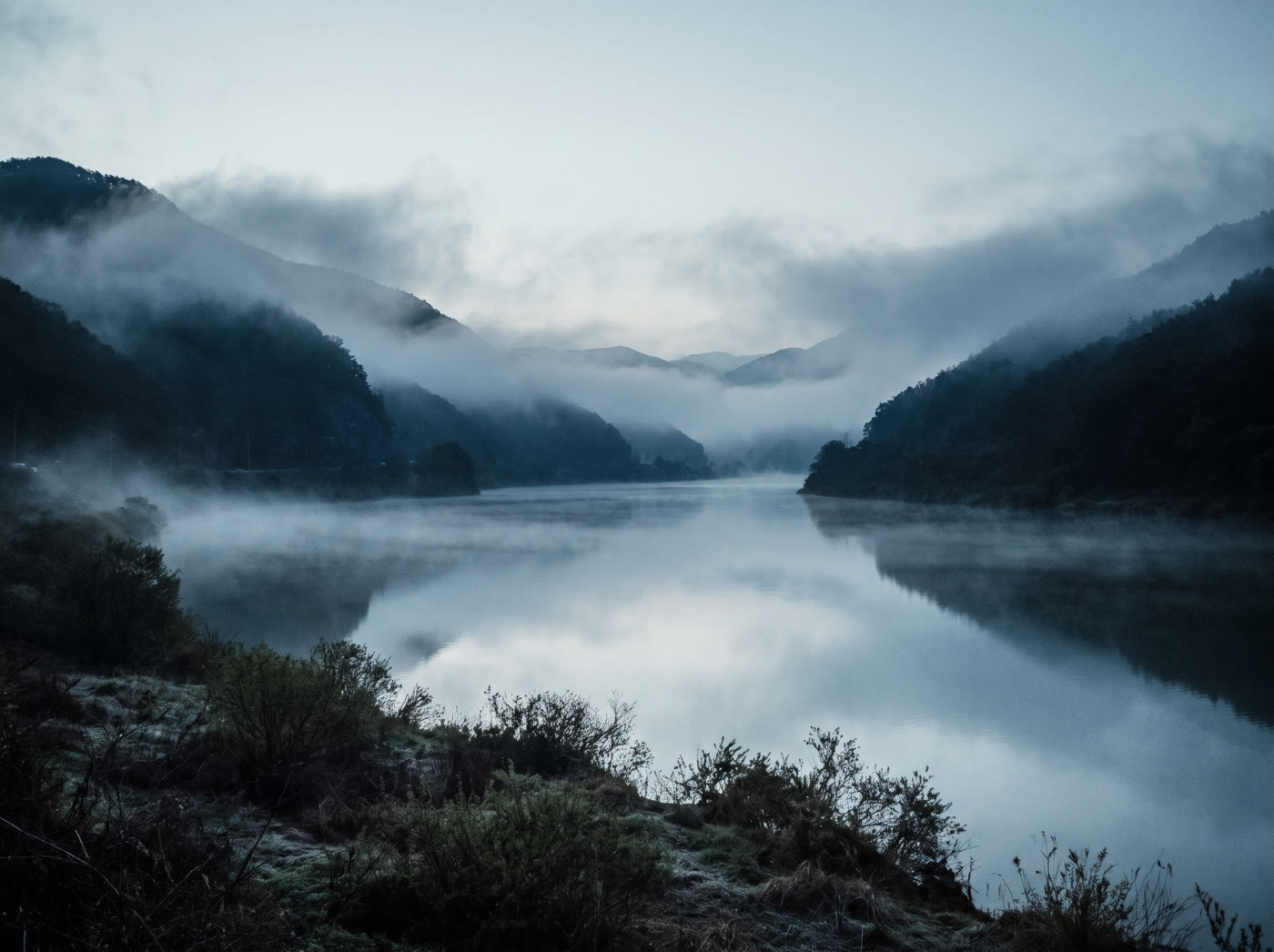
Dongpyeonje — east of the river. Thick and straight. Unadorned.
Seopyeonje — west of the river. Fine and plaintive. The endings stretch long.
Junggoje — Gyeonggi and Chungcheong. The oldest grain survives here.
That's because the lyrics are archaic. Theaters run subtitles, and videos have captions you can turn on. Even if you miss the words, you still hear the voice — it tells you the emotion first.
Slip it in where the singer finishes a passage and catches a breath. If your neighbor goes first, just follow. Nobody minds if you get it wrong — singers welcome a responsive crowd far more than a silent one.
Six hours is the full-length wanchang; most performances run one or two. Many shows perform a single passage. If it's your first time, start with the Sugungga passage that contains 'Beom Naeryeonda.'
The National Gugak Center and the National Theater hold sori gatherings all year round.
Single-passage evenings, and six-hour wanchang too.
Opens the National Gugak Center performance guide
The images and video on this site were generated with AI. I wrote an article on how AI can help share a cultural heritage — the thinking and the process behind this site.